Double Level Residential Home Mould and Water Damage Remediation- NSW
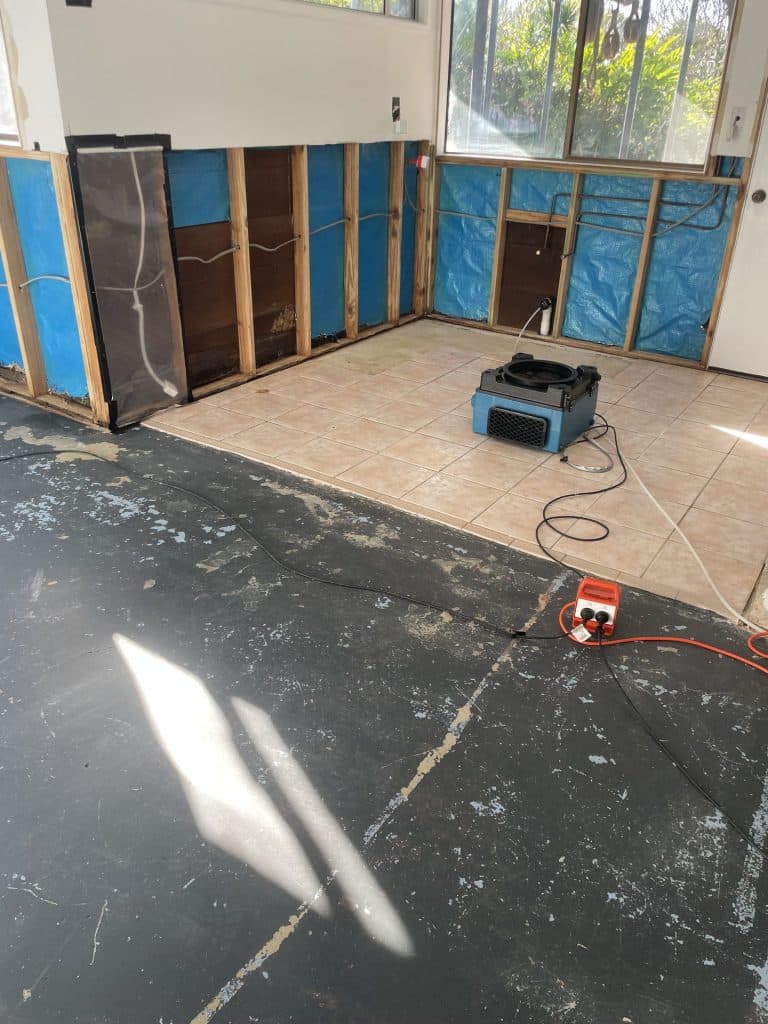
Double level residential home affected by internal water damage impacting flooring systems and adjoining rooms.
The Problem
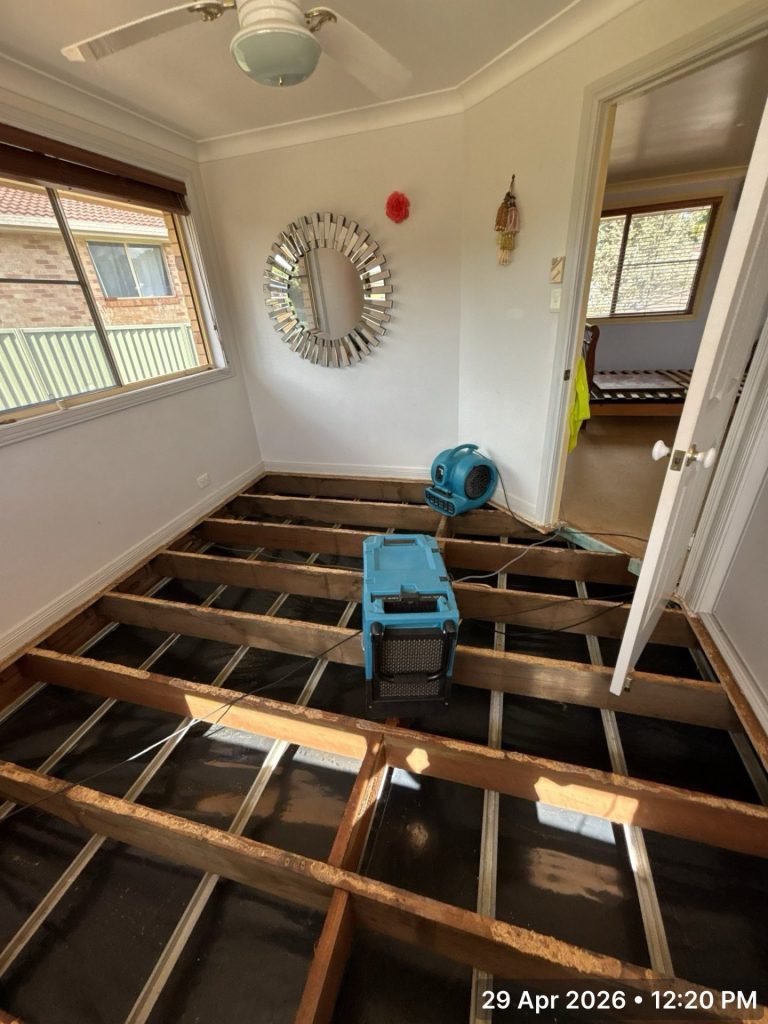
The property experienced water damage following a slow leak, which spread into adjoining areas of the home. At the time of our initial inspection, the flooring and subfloor were already fully compromised.
Damage was identified across multiple rooms, including compromised yellow tongue flooring and mould growth to the subfloor framing.
Key risks included
- Moisture retention within subfloor systems
- Immunocompromised elderly occupants
- Subfloor structural failure
- Contamination of internal surfaces
- Mould growth within bearers and joists requiring professional removal
Our Assessment
We completed a full water damage inspection, including moisture readings, visual assessment, and documentation of affected areas. Findings confirmed that flooring materials had been impacted and required removal to allow remediation of the remaining bearers and joists.
The Solution
A structured remediation plan was implemented across multiple stages to address both visible damage and underlying moisture conditions.
Works included
- Removal of contents from affected areas to allow safe access
- Installation of containment and HEPA air filtration to control airborne contaminants and achieve required air changes
- Removal and disposal of affected subfloor materials to expose structural elements
- Mid project reassessment to adjust scope based on newly exposed conditions
- Aggressive cleaning of timber bearers and joists using both HEPA sanding and Serum 1000 20% hydrogen peroxide application to remove mould
- Full surface decontamination using HEPA vacuuming and surfactant wet wiping
- Drying works using dehumidification and air movement to return frame work to the dry standard
- Final removal of equipment and containment following completion of remediation
The Outcome
Affected flooring and subfloor areas were successfully remediated, with contaminated materials removed and structural elements cleaned and treated. The drying process reduced moisture levels across impacted areas, allowing the property to progress toward reinstatement.
The staged approach ensured that hidden damage was addressed during the works, reducing the risk of incomplete remediation or recurring issues after repairs.
Put simply, the mould was removed from the building materials and the air, with the property now ready to have new building materials installed.
Why This Project Matters
Water damage in residential homes often extends beyond what is visible on the surface. This project highlights the importance of
- Removing materials to properly access subfloor systems
- Using containment and air filtration to control contamination
- Reassessing conditions during works rather than relying on initial inspections only
- Combining cleaning and drying to achieve a complete remediation outcome
By taking a structured and adaptable approach, we ensured the property was not only cleaned but properly prepared for long term reinstatement.
Educational Facility Photography Room) Mould and Water Damage Remediation - NSW
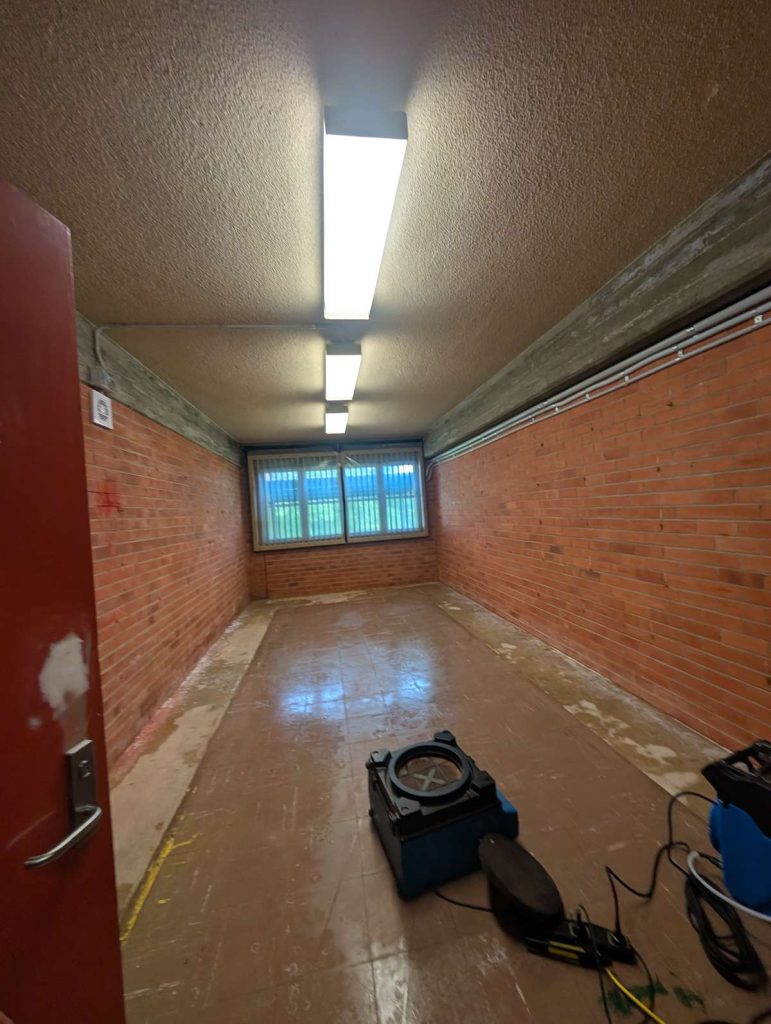
When a high school photography department experienced ongoing moisture issues, the source was traced to a failed commercial cool room system. Persistent leaking and condensation created elevated moisture to surrounding building materials and elevated humidity across multiple rooms within the photography facilities, resulting in widespread mould contamination and water damage.
This project demonstrates the risk that unresolved moisture poses within education facilities and commercial buildings, particularly in specialised environments such as dark rooms and laboratory-style spaces that have low sunlight and ventilation.
The Problem
Commercial facilities and education environments with enclosed rooms (such as photography labs and dark rooms) are high-risk for mould amplification when any excess humidity or condensation is present. In this case, persistent moisture from the cool room system affected multiple adjacent rooms, resulting in:
• Elevated humidity and condensation
• Widespread mould contamination to contents and surfaces
• Complex contents handling requirements (restorable vs non-restorable including historical and sentimental items)
• Need for strict containment to prevent cross-contamination across the facility
The Solution
Our commercial mould remediation and water damage response was delivered as an in-order, controlled process. The scope of works and methodology are integrated below as the stepped solution:
Step 1 — Source Rectification (Pre-Works Requirement)
Remediation works were scheduled after the cool room was replaced to stop active leaking and condensation. Moisture source rectification is essential for long-term remediation success in commercial facilities.
Step 2 — Engineering Controls & Containment
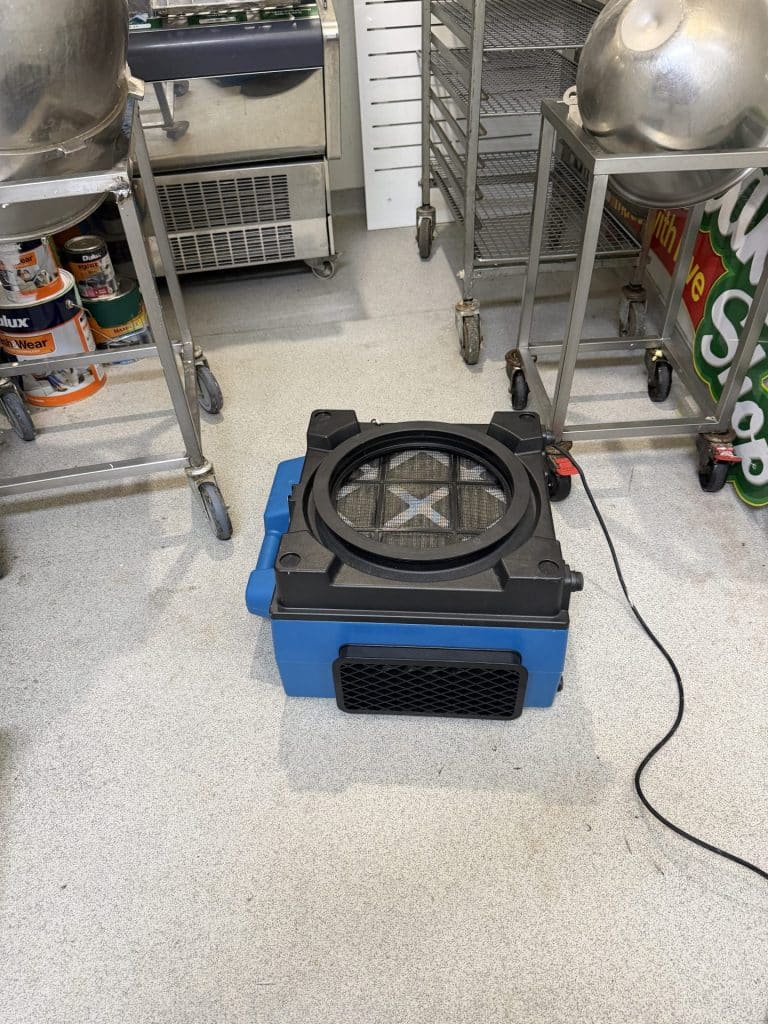
Containment barriers were installed between rooms to prevent cross-contamination. HEPA air scrubbers and dehumidifiers were deployed to continuously filter airborne particulates in all rooms, dry concrete subfloors and control relative humidity. These controls provided environmental Stabilisation and maintained separation across the facility.
Step 3 — Contents Triage, Categorisation & Handling
A large volume of contents (historical photography items, cameras, lab materials and stored equipment) was systematically assessed and categorised into:
• Restorable contents — retained for controlled cleaning
• Non-restorable contents — documented and presented for client (school) sign-off prior to disposal
Step 4 — Establish a Clean Storage Chamber (Controlled Staging)
One room was emptied and remediated early and converted into a clean storage chamber. Restorable contents were cleaned and then stored in this controlled, clean environment to prevent recontamination.
Step 5 — Building Strip-Out of Affected Materials (Flooring & Shelving)
Porous and heavily impacted materials were removed to eliminate embedded contamination:
• Strip-out and disposal of mould and water damaged flooring
• Strip-out and disposal of contaminated shelving systems
Step 6 — Room Remediation Cleaning (HEPA Sandwich Method)
Once rooms were cleared, all accessible surfaces were remediated using a HEPA ‘sandwich’ methodology:
• HEPA vacuum
• Antimicrobial wet-wipe / agitation where required
• Final HEPA vacuum
This approach removes surface contamination and residual particulate across commercial interiors (with already installed air filtration devices cleaning the air at the same time)
Step 7 — Post Remediation Verification (Third-Party Clearance)
A third-party hygienist/IEP completed air and surface verification. Clearance was achieved on the first assessment, confirming the rooms were returned to a condition suitable for occupancy and normal facility operations.
The Result
The photography facilities were returned to safe operational use. Three primary rooms were stabilised and restored:
• One room served as the controlled clean storage chamber for restored contents
• Two rooms were fully cleared, stripped where required (flooring/shelving), and remediated
Following completion, surfaces were visibly clean and third-party air/surface testing confirmed the areas were ready for re-occupancy by the school.
Why This Matters for Commercial Facilities
This project underscores a common commercial risk: condensation and humidity failures (especially around cool rooms) can rapidly drive mould growth and water damage impacts across adjoining rooms. Dark rooms, labs, storage areas and other enclosed facility spaces require proactive moisture management, ventilation, and rapid response when leaks occur.
Early intervention helps facilities reduce downtime, limit asset loss, and avoid large-scale mould remediation costs. Any signs of visible mould growth forming or excess moisture should not be ignored as the problem can continually grow given time.
Large Scale Commercial Mould Remediation - QLD
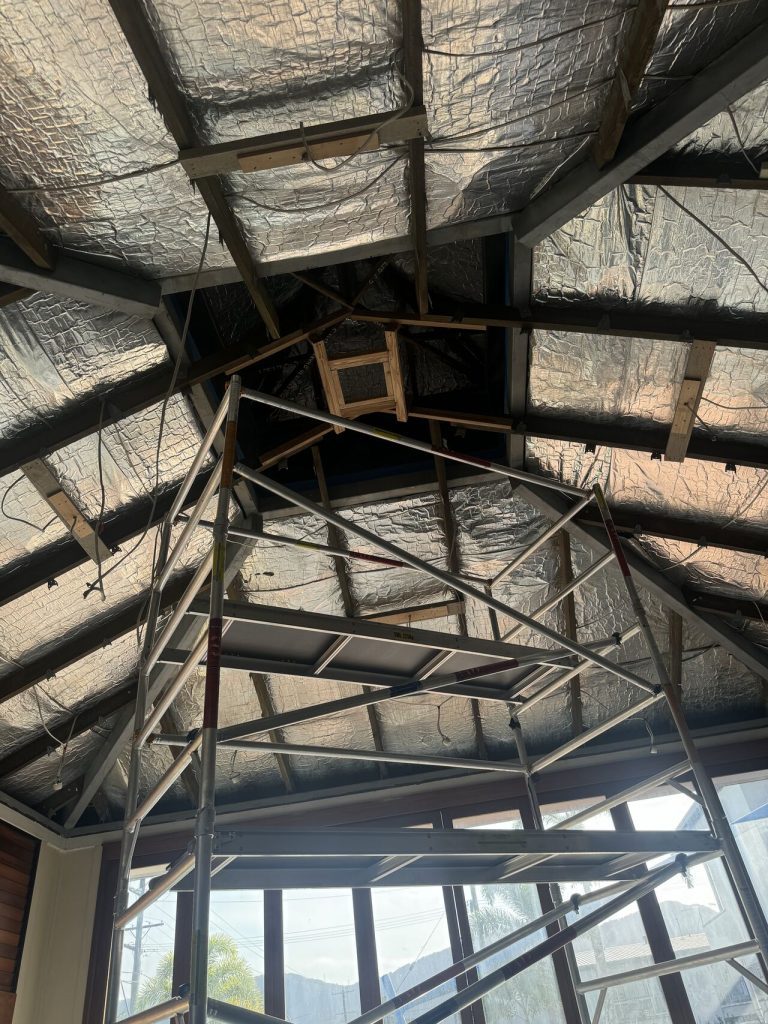
Cleopatra Restoration Group was engaged to undertake a large-scale commercial mould remediation project in Cairns following significant roof failure during Cyclone Jasper.
Water ingress from above impacted ceiling cavities, wall systems, and structural timbers throughout the facility. In total, 62 accommodation rooms, along with the restaurant and reception areas, were remediated as part of a structured program delivered over six weeks.
Due to the extent of contamination and required engineering controls, the building was fully shut down during remediation works to ensure safe, compliant, and effective delivery.
Project Complexity
- 62-room commercial accommodation facility
- Restaurant and front-of-house reception areas impacted
- Extensive ceiling cavity contamination
- Large-scale containment engineering required
- Multi-zone coordination with staged reinstatement
Remediation Strategy
The facility was divided into four engineered containment zones, allowing structured progression of works while maintaining strict contamination control.
This zoning strategy enabled:
- Controlled isolation of contaminated areas
- Progressive remediation and Third-party Post Remediation Verification (PRV) as each zone was remediated
- Staged handover to builders for reinstatement works one zone at a time, once cleared
Strict cross-contamination controls were maintained between remediation chambers and unaffected structural areas.
Engineering Controls & Air Management
Given the scale of the ceiling cavities and interconnected building design, air management was critical.
Multiple air strategies were assessed, including negative, neutral, and positive air systems.
Due to the configuration of the roof voids and structural framework, positive air pressurisation with calculated air changes per hour (ACH) proved most effective in achieving particulate control and remediation efficiency.
Controls included:
- HEPA Air Filtration Devices (AFDs)
- Engineered containment barriers (200um poly)
- Pressure differentials between zones
- Separation of disturbed and undisturbed areas
Remediation Methodology
All works were completed in accordance with ANSI/IICRC S520 (Professional Mould Remediation).
Key processes included:
- Initial removal of Condition 3 Mould Damaged porous materials
- HEPA abrasive sanding of upper structural timbers where required
- Application of Serum 1000 Hydrogen Peroxide to exposed timber frames
- Pre- and Final HEPA vacuuming of all surfaces
- Ongoing moisture monitoring and environmental stabilisation
Electrical services within contaminated areas were carefully coordinated with licensed trades to ensure safety and compliance throughout the project.
Post Remediation Verification
Independent third-party PRV testing confirmed all remediation zones met acceptable criteria for reinstatement.
Executive clearance status: Achieved
Project Outcome
- 62 rooms successfully remediated
- Restaurant and reception fully remediated
- Four engineered containment zones
- Six-week project duration
- Independent third-party clearance achieved
We thoroughly enjoyed working on this project and it demonstrates Cleopatra Restoration Group’s ability to deliver large-scale commercial mould remediation under complex conditions, applying engineered containment, advanced air management strategies, and strict industry compliance.
Educational Facility Mould and Water Damage Remediation - NSW
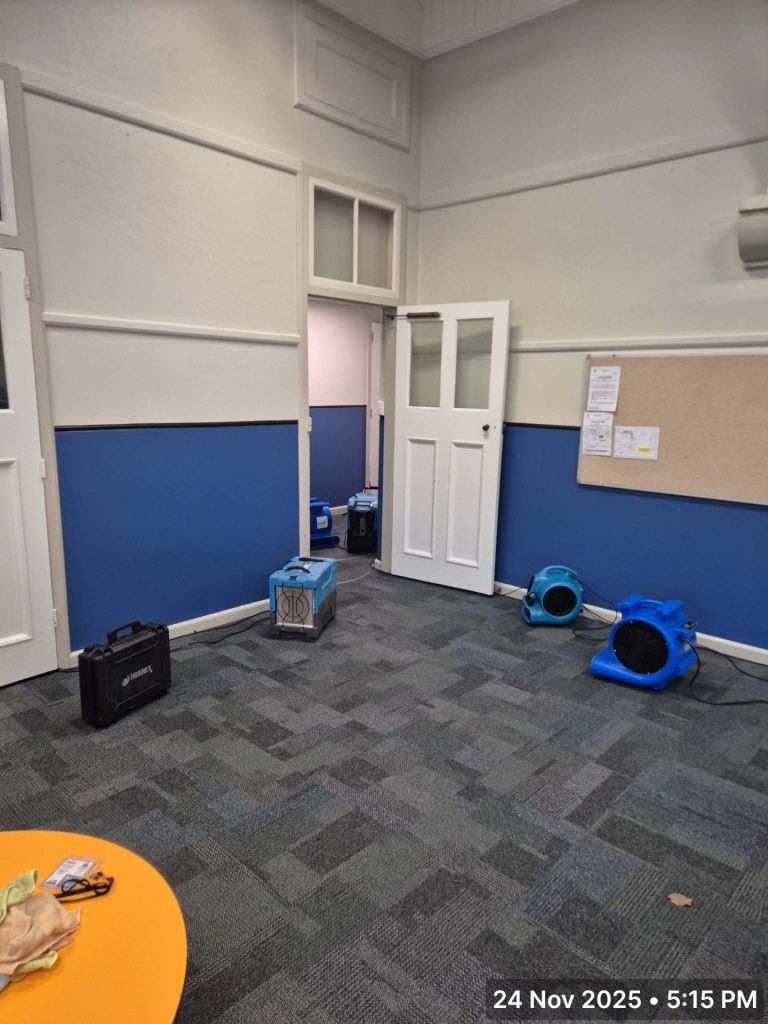
Public education facility comprising classrooms and internal learning spaces requiring strict safety, hygiene, and occupancy controls.
The Problem
The facility identified water damage and mould growth within internal building areas following moisture intrusion. Affected materials raised concerns around indoor air quality, occupant safety, and the suitability of the spaces for continued use by staff and students.
Due to the sensitive nature of an education environment, any remediation works required careful planning to manage health risks and minimise disruption to normal operations.
Our Assessment
We completed a detailed mould and water damage inspection, including moisture mapping, visual assessment, and evaluation of affected internal building materials. Elevated moisture levels were identified, confirming conditions conducive to mould growth.
The assessment focused on determining the extent of impact, identifying affected materials, and establishing a remediation approach suitable for an active education setting.
The Solution
A controlled remediation plan was developed in line with industry standards and education facility requirements.
Works included
- Detailed initial assessment
- Moisture assessment and monitoring
• Installation of containment to isolate affected areas
• HEPA air filtration to control airborne contaminants
• Removal of water damaged and mould affected materials
• Detailed cleaning and preparation of exposed surfaces
• HEPA vacuuming, wet wiping and HEPA vacuuming again all affected surfaces
• Environmental controls throughout the remediation process
• Ongoing monitoring to support drying and reinstatement planning
All works were staged to prioritise safety, compliance, and minimal disruption to facility operations.
The Outcome
Affected areas were successfully remediated, with contaminated materials safely removed and treated. Environmental controls ensured indoor conditions were managed throughout the process, allowing the facility to progress toward reinstatement with reduced risk of recurring issues.
The remediation provided a safer internal environment and clear guidance for ongoing maintenance and repairs.
Why This Project Matters
In education facilities, moisture and mould issues require careful management due to occupant vulnerability and regulatory expectations. This project demonstrates the importance of
• Early identification of moisture issues
• Controlled remediation in sensitive environments
• Strong containment and air quality management
• Structured planning to reduce operational disruption
By applying a disciplined restoration process, we helped restore the affected spaces while maintaining safety and compliance standards.
Residential Flood Recovery and Structural Drying - NSW
Single level residential home affected by repeated floodwater intrusion following heavy rainfall.
The Problem
The property experienced significant internal flooding due to external water ingress during heavy rainfall. After the initial water removal and drying process commenced, the home was re flooded, resulting in further saturation of internal building materials.
The water source was classified as Category 3 due to external groundwater intrusion, increasing the risk of contamination, material deterioration, and prolonged drying time if not managed correctly.
Additional risks identified included
• Re saturation of flooring and wall framing
• Elevated internal humidity and moisture levels
• Potential microbial growth if drying was delayed
• Structural timber exposure and deterioration
Our Assessment
We carried out detailed moisture mapping and environmental monitoring across affected areas, including living spaces and internal wall cavities. Readings confirmed elevated moisture levels within flooring systems, timber framing, and internal surfaces.
Given the re flooding event, a drying variation was required to reassess moisture conditions, adjust equipment requirements, and extend the drying period to ensure materials could return to acceptable levels rather than being prematurely reinstated.
The Solution
A controlled structural drying strategy was implemented and adjusted as conditions changed.
Works included
• Removal of bulk water following re flooding
• Installation of high capacity dehumidification and air movement equipment
• HEPA air filtration to support environmental control
• Ongoing repositioning of equipment based on moisture readings
• Continuous monitoring of temperature, relative humidity, and material moisture content
• Progressive reduction of equipment as drying targets were achieved
• Detailed cleaning and treatment of exposed structural elements once drying was complete
Drying equipment remained in place until moisture readings demonstrated a consistent downward trend and materials approached acceptable dry standards.
The Outcome
Moisture levels across affected areas reduced progressively over the drying period, with final readings confirming the effectiveness of the drying strategy. Once drying was complete, equipment was safely removed and affected areas were left in a condition suitable for reinstatement.
By extending and adjusting the drying process rather than rushing reinstatement, the risk of trapped moisture, secondary damage, and future mould growth was significantly reduced.
Why This Project Matters
Flood affected homes often require flexible drying strategies, particularly when re flooding occurs. This project demonstrates the importance of
• Ongoing moisture monitoring rather than fixed drying timeframes
• Adjusting drying strategies when conditions change
• Data driven decisions to support drying variations
• Prioritising long term outcomes over short term reinstatement
By managing the drying process carefully, we helped protect the structure of the home and reduce the risk of future moisture related issues.
Commercial Mould Remediation - NSW
Business Type
Ground floor commercial food service business with on site food preparation and storage areas, operating under strict hygiene and safety requirements.
The Problem
The business identified mould growth on the ceiling within a storage area. Our inspection confirmed the issue was caused by an ongoing roof leak via upstairs balcony, resulting in elevated moisture levels within ceiling linings and cavities. Left untreated, the conditions posed a risk to food safety, staff health, and business continuity.
Our Assessment
We completed a detailed mould and water damage inspection, including moisture mapping and ceiling cavity assessment. Elevated moisture readings were recorded across multiple locations, with visible mould like growth present on plasterboard and internal framework.
Due to the operational nature of the business, restoration planning focused on containment, hygiene control, and minimising disruption.
The Solution
A staged remediation plan was developed to meet commercial and food safety standards.
Works included
• Electrical make safe to affected ceiling fixtures
• Engineered containment and HEPA air filtration
- Cleaning or disposing of contents depending on restorability
• Controlled removal of contaminated ceiling materials
• Aggressive cleaning of exposed structural elements
• HEPA vacuuming and wet wiping of all affected surfaces
• Ongoing air filtration under negative pressure during works to prevent cross contamination
• Moisture survey and drying works to return the building materials to the dry standard
All works were scheduled outside trading hours where possible.
The Outcome
Mould affected materials were safely removed, treated, and contained. The area was left clean, controlled, and suitable for reinstatement once the source leak is permanently rectified. The business was able to move forward without ongoing contamination risks.
Why This Project Matters
Food service environments require fast, controlled remediation when mould and moisture issues arise. This project demonstrates our ability to manage complex commercial restorations with minimal disruption while maintaining hygiene and compliance standards.
What Clients say about us.
–
–
–
–
–
–
–
–
–
–
–
–
–
–
–
–
–
–
We are ready to get the job done.
If you’re looking to partner with a reliable cleaning company that always gets the job done right first time, speak to Cleopatra.
Just let us know what you need and we’ll provide you with a no-obligation quote.